
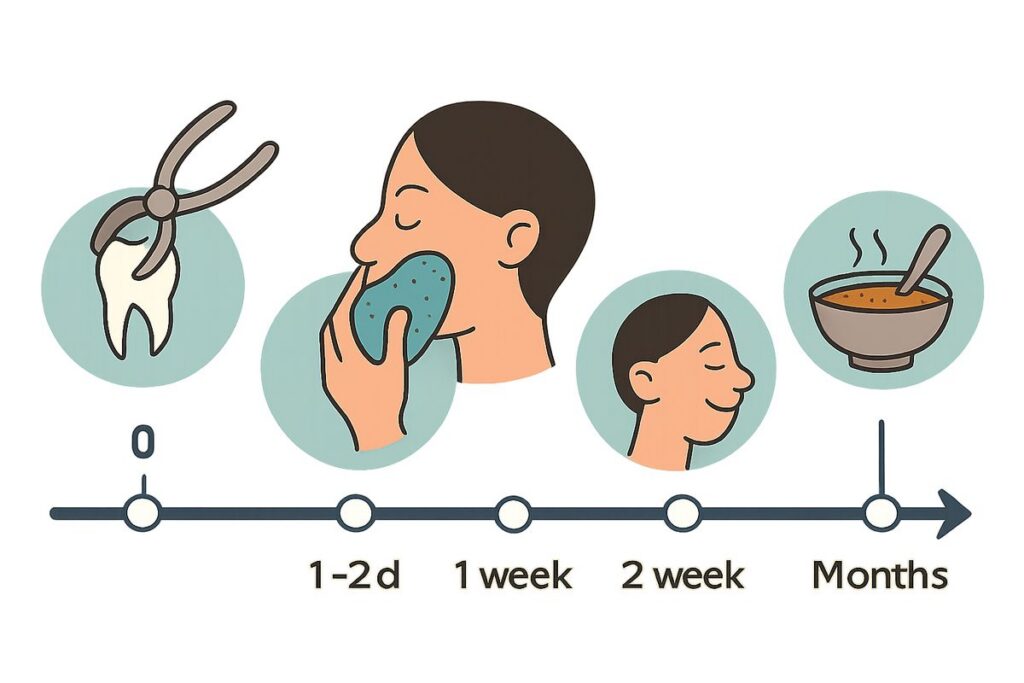
The “wisdom tooth extraction timeline” outlines what to expect from the first consult through full recovery. This guide walks you step-by-step: initial visit, imaging and prep, the day of surgery, the first 24–72 hours, the first month, longer-term bone healing, common complications, and when to call your surgeon. Read on for a clear, easy-to-follow explanation so you know typical times, milestones, and warning signs—including specific notes for patients looking for a wisdom tooth extraction timeline in Omaha, NE.
Initial consultation & planning
At your first visit, the surgeon reviews your medical history and medications and does an oral exam. X-rays or a 3D scan help show tooth position, root shape, and nearby nerves. How erupted or impacted the tooth is will change the wisdom tooth extraction timeline in Omaha, NE: fully erupted teeth usually require simple extractions; impacted teeth may require longer surgery and a longer recovery. You’ll get pre-op instructions—stop certain meds, arrange a ride, and follow fasting rules if sedation is planned.
Imaging and pre-op preparations
Common imaging includes a panoramic X‑ray and, when needed, a cone beam CT for detailed 3D views. These images reduce surprises and speed safe decision-making. Pre-op steps often include fasting for IV or general anesthesia, adjusting blood thinners with your doctor, and arranging someone to drive you home. Sedation options (local only, IV sedation, or general anesthesia) are discussed; picking the right option affects both comfort and the immediate recovery window.
Day of surgery: the procedure itself
Anesthesia choices and what patients feel
Local anesthesia numbs the area—patients remain awake and recover quickly, but may feel pressure. IV sedation makes patients groggy and more comfortable; recovery takes several hours. General anesthesia is rare for routine cases but may be used for complex situations; it requires longer monitoring. The type of anesthesia affects when you can eat, drive, or return to work.
Typical procedure length and steps
A routine extraction can take 15–30 minutes; an impacted tooth often takes 45–90 minutes. Steps include a small incision, bone removal if needed, sectioning the tooth for safer removal, cleaning the socket, placing sutures, and sometimes applying long-acting local pain control (like EXPAREL®) to reduce early pain. After surgery, you’ll be observed until the anesthesia effects wear off; IV sedation and general anesthesia require longer monitoring.
First 24 hours: what to expect
Expect bleeding to taper on the first day—bite on gauze as directed. Swelling usually starts right away and peaks around 24–48 hours. Pain is typically strongest in the first 12–48 hours; your surgeon will recommend pain meds (nonsteroidal anti-inflammatories, acetaminophen, or stronger prescriptions if needed). Use cold packs for the first 48 hours, stick to soft foods, avoid spitting or using straws, and sleep with your head elevated to limit bleeding and swelling.
48–72 hours and the first week: key healing milestones
Swelling and bruising usually start to fall after 48–72 hours; pain steadily decreases. Sutures may begin to loosen or be removed at a 5–7 day follow-up if needed. Keep rinsing gently with salt water after 24 hours to aid healing but avoid vigorous rinsing. Limit heavy exercise for at least a week. Watch for worsening pain, fever, or increasing swelling—these can signal a complication.
Two weeks to one month: continued recovery
By two weeks, the gum tissue has mostly closed, and many patients can return to normal eating. Stiffness and mild tenderness can linger, but day-to-day activities are usually back to normal. Numbness that lasts beyond a few days should be monitored; most temporary nerve issues improve over weeks to months. If you still have numbness or increasing pain after two weeks, contact your surgeon.
Months after extraction: bone and soft-tissue healing
Deeper bone remodeling takes longer—expect bone to fill and reshape the socket over 3–6 months. This matters if you later want implants or orthodontics, since bone volume and health affect the timing of future treatment. Soft tissue and full strength usually return sooner, but complete internal healing is gradual. Your surgeon can advise when it’s safe to begin implants or other dental procedures based on healing progress.
Possible complications and when to contact your surgeon
Know the common problems and their timing: dry socket often appears 3–5 days after extraction with severe, worsening pain; infection can start several days post-op with swelling, fever, or drainage; prolonged numbness (weeks) can indicate nerve irritation; persistent bleeding beyond the first day is a red flag. Contact your surgeon right away for severe pain not controlled by meds, fever over 101°F, swelling that worsens after 48–72 hours, heavy bleeding, or spreading numbness.
Why choose Midwest Oral Surgery & Dental Implants for your procedure
Midwest Oral Surgery & Dental Implants offers board-certified surgeons with hospital privileges, advanced imaging (cone beam CT), IV sedation and general anesthesia options, and long-acting local pain control, such as EXPAREL®. That experience and technology lead to safer, more predictable timelines and better early pain control for patients in Omaha, NE.
Quick “wisdom tooth extraction timeline” checklist & closing CTA
– Consult & imaging → plan and choose anesthesia
– Day of surgery → 30–90 minutes procedure, monitored recovery
– First 24 hours → bleeding control, ice, soft diet, rest
– 48–72 hours → swelling peaks then improves; pain eases
– 1 week → sutures may be checked/removed; return to light activities
– 2 weeks → gum healing; most normal activities resume
– 3–6 months → bone remodeling completes; timeline for future implants
If you need a clear wisdom tooth extraction timeline in Omaha, NE, or have urgent concerns after a surgery, contact Midwest Oral Surgery & Dental Implants to schedule a consult or emergency visit. Our team can review your images, explain your expected timeline, and provide care tailored to a safe, comfortable recovery.