
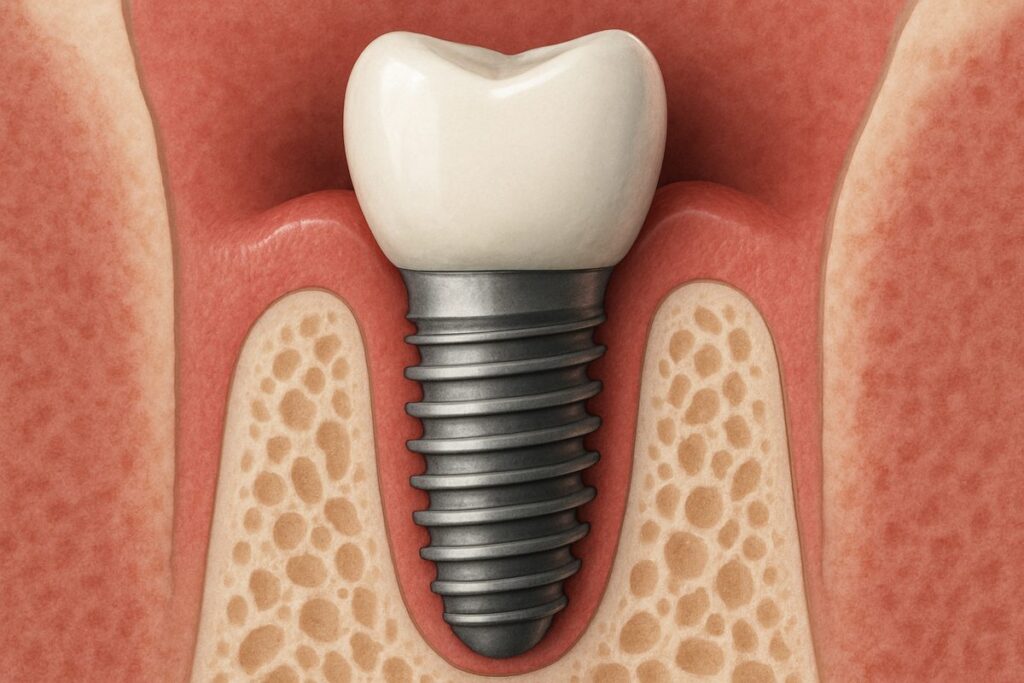
Dental implants are small posts that replace tooth roots and hold crowns or dentures. Many patients ask, “What is the best implant for teeth?” The short answer is that there isn’t one perfect implant for everyone. In this article, you’ll learn the main implant types, what patient and surgical factors guide the choice, who places the implant versus who makes the crown, and when to see a specialist so you get the right long-term result.
Short answer: What is the best implant for teeth near Omaha, NE
There is no single best implant. The right choice depends on your jawbone, where the tooth sits, your overall health, and how natural you want it to look. If you’re asking what is the best implant for teeth in Omaha, NE, a consultation with imaging and an exam will show which option fits your needs.
Common implant types
Titanium implants
Titanium implants have been used for decades. Pros: very strong, well-studied, and work with most crowns and dentists’ systems. Cons: They are metal, which some patients prefer to avoid for personal or medical reasons.
Zirconia (ceramic) implants
Zirconia implants are metal-free and offer a white color that can look more natural on front teeth. Pros: good esthetics and biocompatibility. Cons: fewer long-term studies and slightly different strength limits compared with titanium. If you’re wondering what the best implant for teeth in Omaha, NE, is and want a metal-free option, zirconia may be a good option.
Key patient factors that decide the best implant
Bone quantity and quality
Good bone is needed to hold an implant. CT scans (CBCT) show bone shape and size. If the bone is thin or low, bone grafting may be required before or during implant placement.
Tooth position and esthetics
Front teeth need very natural-looking results and careful planning of gum shape. Molars need wider, stronger implants for chewing. The location influences whether titanium or zirconia is used, and what abutment is used.
Medical history and habits
Smoking, poorly controlled diabetes, certain medications, or allergies change risk and healing. These factors help decide implant type and timing.
Surgical and technical factors
Imaging and planning (CBCT, digital scans, surgical guides)
3D imaging and digital scans improve accuracy and predictability. Surgical guides control the angle and depth to avoid nerves and place implants where the restoration will look and function best.
Implant diameter, length, and connection type
Size matters: diameter and length are determined by the available bone and the type of crown. The implant-abutment connection affects how the crown attaches and long-term maintenance.
Who does what: surgeon vs general dentist
Oral surgeons or implant specialists place the implant post and often the abutment. Your general dentist then fabricates and places the final crown or denture. Good communication between providers leads to better aesthetic and functional outcomes.
Long-term success and maintenance
Success depends on correct placement, a well-made restoration, daily oral hygiene, and regular dental check-ups. Choosing proven implant systems and following care instructions helps implants last for decades.
When to consult a specialist
See an oral surgeon if you need bone grafts, multiple implants, full-arch work, or have a complex medical history. If you ask, “What is the best implant for teeth in Omaha, NE?” a specialist can review your CT scan and offer a clear plan.
About Midwest Oral Surgery & Dental Implants
Midwest Oral Surgery & Dental Implants in Omaha places implants and abutments using CBCT, digital scans, and surgical guides. They offer titanium and zirconia options and coordinate with your general dentist to finish the crown for a natural, lasting result.
Next steps / Call to action
Talk with your dentist or schedule a consultation with an oral surgeon to review CT imaging and get a personalized recommendation. That is the best way to answer “what is the best implant for teeth” for your smile.