
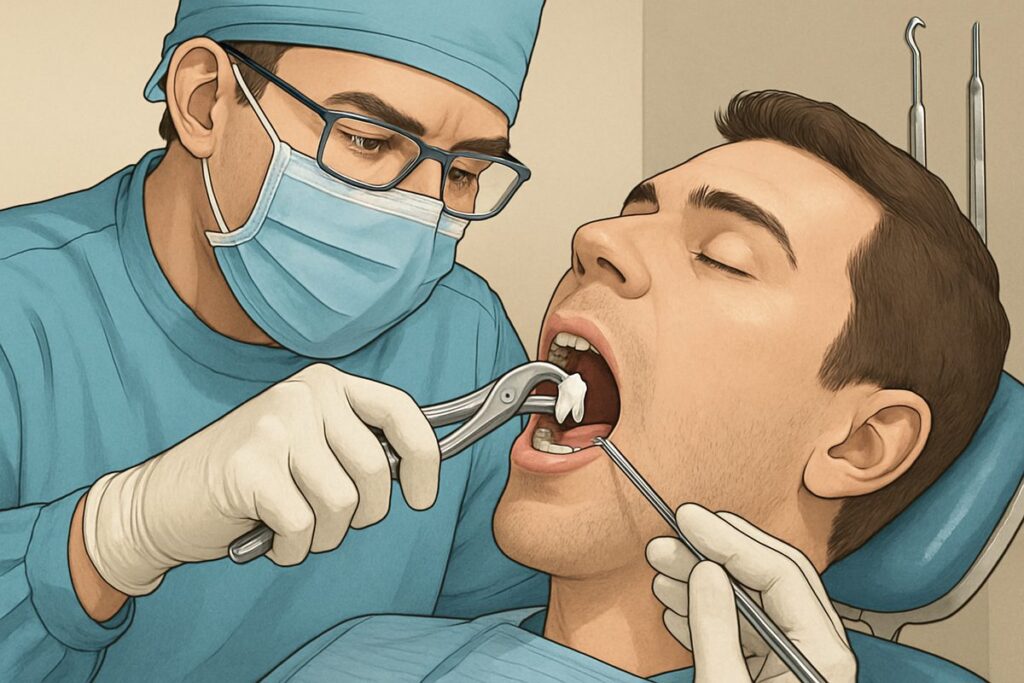
If you’re wondering what happens when you get your wisdom teeth removed, this short guide explains the steps, what to expect, and how to recover. Whether you need one tooth pulled or all four, knowing the process eases nerves and helps you prepare. This article covers the pre-op visit, anesthesia options, the day-of steps, healing timeline, home care, signs to call your surgeon, how to prepare, a brief practice note, quick FAQs, and how to get help.
What Happens During a Wisdom Tooth Removal Pre-Op Consultation
Your surgeon will take a medical history and examine your mouth. X-rays or a CBCT scan may be ordered to see tooth position, root shape, and the relationship to nerves. This imaging helps the surgeon decide whether a simple extraction or a surgical approach is needed. Expect questions about medications, allergies, and any past anesthesia reactions.
Types of Anesthesia and Sedation
Local anesthesia
Local anesthesia numbs the area around the tooth so you don’t feel pain during the extraction. You stay awake and aware, but the mouth feels numb. Local anesthesia is common for easier, quick removals.
IV sedation vs. general anesthesia
IV sedation makes you groggy and often results in little or no memory of the procedure. You’ll have monitoring and an IV for fluids and medications. General anesthesia is less common for routine removals but may be used for complex cases or when multiple health factors apply. Both are given by trained staff with safety checks in place.
Step-by-Step: What Happens When You Get Your Wisdom Teeth Removed
Before surgery
Arrive on time, sign consent forms, and review instructions. If you had sedation planned, you’ll need a ride home. The team will review your medical history and prep the treatment area.
During the procedure
The surgeon makes a small incision if the tooth is impacted. Sometimes a bit of bone is removed and the tooth is sectioned into pieces to make removal easier. Once out, the site may be cleaned and stitched. The whole office procedure often takes 20–60 minutes depending on complexity.
Immediately after
You’ll rest in recovery while staff monitor you. If sedated, you may feel groggy and need extra observation until your vitals are stable. You’ll get post-op instructions and a plan for pain control.
Normal Healing Timeline & Common Aftereffects
First 24–48 hours: bleeding and swelling are common. Use ice packs and rest with your head elevated. Days 3–7: pain often peaks then gradually improves; follow meds and rinses. One to two weeks: stitches may be removed or dissolve; most return to normal activity. Bruising, limited jaw opening, and altered taste are usually temporary.
Pain Control, Home Care, and Diet
Use prescribed or over-the-counter pain meds as directed; non-opioid options work well for many. Apply cold packs early, then warm compresses after 48 hours if swelling persists. Saltwater rinses help keep the site clean. Eat soft foods (yogurt, mashed potatoes, smoothies) and avoid hard, crunchy, or hot foods until healed.
When To Call Your Surgeon
Call if you have heavy bleeding that won’t stop, fever or spreading redness, increasing pain after several days, pus, numbness that doesn’t improve, or trouble breathing/swallowing.
How to Prepare Ahead of Time
Arrange a ride home, stock soft foods, set up pillows and ice packs, and follow medication instructions. Stop certain medicines only if your surgeon tells you to.
About Midwest Oral Surgery & Dental Implants
Midwest Oral Surgery & Dental Implants in Omaha, NE, offers board-certified surgeons, advanced imaging like CBCT, and IV sedation options to make wisdom tooth removal safe and predictable. They provide hospital privileges and 24/7 emergency care for complex needs.
Quick FAQs
Will my face be swollen? Yes, some swelling is normal and peaks around day 2–3. How long before I can return to work/school? Many return in 2–4 days, depending on pain and the job. Can I get all four removed at once? Often yes; your surgeon will recommend the best plan for you.
Ready to Get Your Wisdom Teeth Removed?
Wondering what happens when you get your wisdom teeth removed? If you have questions or need wisdom tooth care, contact us at Midwest Oral Surgery & Dental Implants for a consultation or emergency care. Their team focuses on safe, patient-first treatment to help you heal with confidence.