
If you’re reading about periodontics dental implants, you want a clear picture of who does what, how the surgery works, and who finishes the tooth. This article explains the roles of periodontists, oral surgeons, and general dentists, walks through each treatment step, and offers practical tips for working with your dental team. Expect plain answers about planning, surgery, healing, risks, technology, and what to ask at your consult.
Periodontics Dental Implants: Who Does What
Periodontists specialize in gum and supporting bone health. They treat gum disease and place dental implants when soft-tissue work or complex grafts are needed. Oral and maxillofacial surgeons focus on placing dental implant posts and abutments—especially for difficult anatomy or grafting needs. General dentists and prosthodontists typically restore the final tooth crown, dental bridge, or denture that you see and use daily.
How the Procedure Works: Step‑by‑Step
Initial exam and digital planning
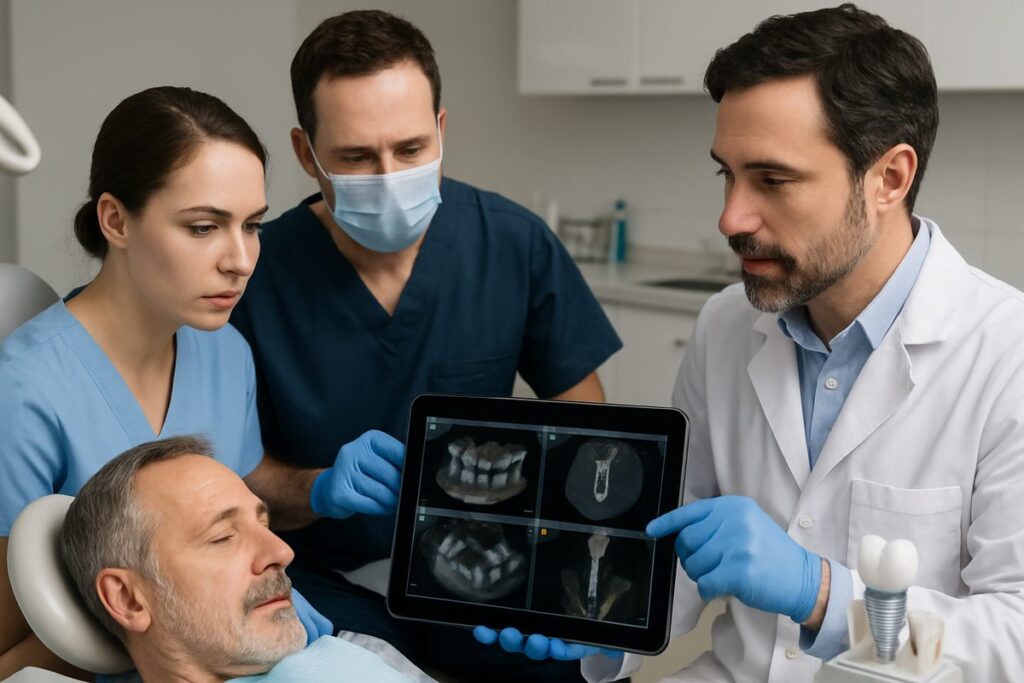
Your team will take a Cone Beam CT (CBCT) scan and a digital intraoral scan to map bone, nerves, and gum contours. These images show whether you have enough bone or need grafting. Candidates are evaluated for bone volume, gum health, overall medical health, and habits like smoking.
Surgery: placing the dental implant post and abutment
The surgeon (oral surgeon or periodontist) places the titanium or zirconia dental implant post into the jawbone. In many cases the abutment is placed at this time or at a second visit. The surgeon focuses on precise placement and the surgical hardware; coordination with your general dentist or prosthodontist is needed for the final tooth.
Healing and osseointegration
Bone typically fuses to the dental implant over several weeks to months—often 3 to 6 months. Soft tissue around the dental implant also needs to mature. If bone grafting or sinus lifts were done, healing can take longer before the final restoration.
Final restoration by your general dentist or prosthodontist
Once the dental implant is stable, your general dentist or a prosthodontist will make and fit the tooth crown, dental bridge, or denture. They adjust bite, shade, and fit so the result looks natural and functions well.
When You Might Need a Periodontist vs an Oral Surgeon vs a GP
Choose an oral surgeon for complex bone grafting, impacted roots, or medical issues that raise surgical risk. See a periodontist when gum disease or soft-tissue grafting is the main concern. For routine dental implants and the final tooth, a trusted general dentist often manages the restoration and long-term care.
Risks, Recovery, and Pain Management
Common risks include infection, temporary nerve sensitivity, and sinus issues in the upper jaw. Recovery usually involves swelling and light discomfort for a few days. Pain control options include oral meds, IV sedation for comfort during surgery, and EXAPREL® (Exparel®) to reduce post-op narcotic need.
Technology That Improves Safety and Outcomes
Tools like CBCT, surgical guides, iTero scans, intraoral cameras, and zirconium dental implant options cut surprises and boost accuracy. Guided surgery and digital planning let teams place dental implants to exact depth and angle for better long-term success.
How to Work With Your Dental Team
Bring prior x-rays or scans and confirm who will place the dental implant hardware and who will restore the tooth. Ask about timelines, how the surgeon and GP will share records, anesthesia options, and follow-up visits. Clear communication prevents delays and confusion.
About Midwest Oral Surgery & Dental Implants
Midwest Oral Surgery & Dental Implants is a multi‑doctor oral surgery practice in Omaha, NE, experienced in dental implant surgery, bone grafting, advanced imaging, and sedation. Their surgeons place dental implant posts and abutments and work with patients’ general dentists to complete the final restoration.
Book Your Consultation for Periodontics Dental Implants Today
Contact us to schedule a consult, bring any current x-rays or scans, and ask who will handle each step of your care. Confirm timing for surgery, healing, and restoration so you have a clear plan from start to finish.