
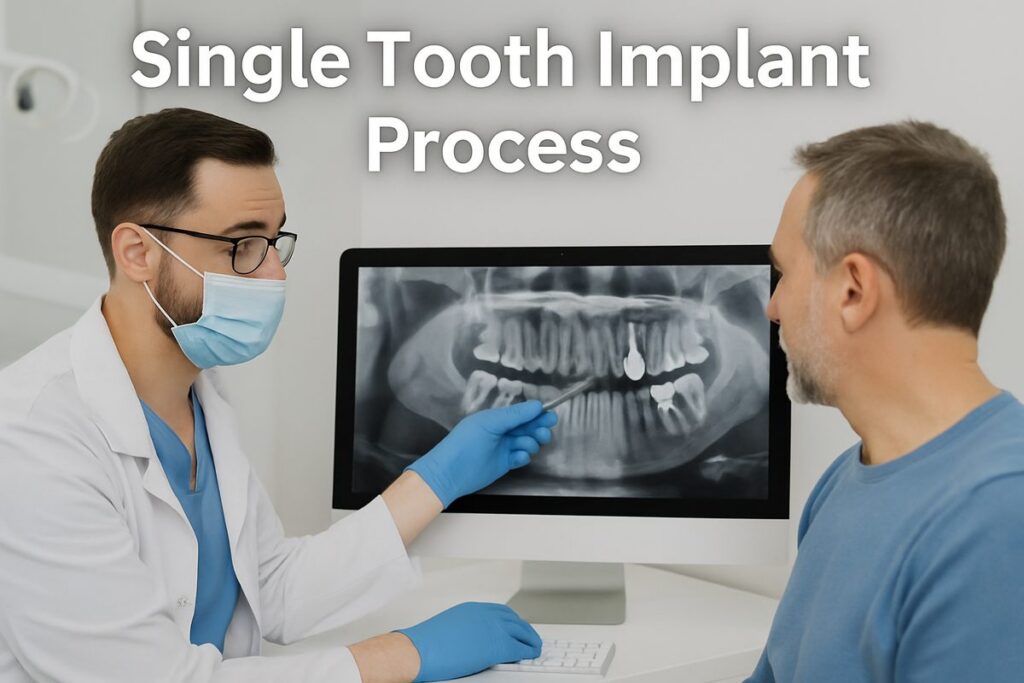
If you’re searching for single-tooth implants near me in Omaha, this guide explains what a single-tooth implant is, who handles each part of care, and how to find trustworthy help. You’ll learn what surgeons do (and don’t), the typical timeline, when extra procedures are needed, how to vet providers, rough cost factors, and simple next steps to get a coordinated plan with your dentist and oral surgeon.
What Is a Single Tooth Implant?
A single tooth implant replaces one missing tooth with three parts: the implant post (titanium or zirconia) placed in the jaw, an abutment that connects the post to the crown, and the final crown that looks like a natural tooth. Unlike a bridge, an implant does not rely on neighboring teeth for support. Unlike dentures, it’s fixed and helps preserve jawbone by transferring chewing forces to the bone. Benefits include a natural look, long-term stability, bone preservation, and protection of adjacent teeth.
What the Oral Surgeon Does — and What They Don’t
Oral surgeons place the implant post and abutment and handle surgical needs like bone grafts or sinus lifts. They manage anesthesia and surgical complications and work in settings where complex medical knowledge is required. Many oral surgeons do not place the final crown; your general dentist typically fabricates and places it after healing. That team approach—surgeon for the surgery, GP for the restoration—is standard and often gives the best outcome.
What to Expect During the Implant Process
Consultation & Planning
Your team will use a CBCT scan and often an intraoral digital scan to evaluate bone, nerve position, and ideal implant placement. This planning step reduces surprises and improves accuracy.
Surgery Day
On surgery day, you’ll have local anesthesia, sometimes IV sedation. The surgeon places the implant—often using a surgical guide made from the digital plan—to control angle and depth. If bone grafting is needed, it may be done at the same visit.
Healing & Restoration
Osseointegration (bone fusing to the implant) usually takes several months. You may have a temporary tooth during this time. Once healed, your GP will take impressions or digital scans and place the final crown.
When Additional Treatments Are Needed
If a tooth has been missing for a long time, bone loss may require ridge preservation, bone grafting, or a sinus lift for upper back teeth. These add time and cost but are necessary when bone volume is low. Signs include a narrow ridge, a thin jawbone on CBCT, or a history of long-term tooth loss.
How to Search and Vet Providers for “single tooth implants near me.”
Search for board-certified oral surgeons with hospital privileges and modern tech like CBCT and surgical guides. Ask: who will place the crown, what anesthesia options are offered, the expected timeline, the complication policy, and follow-up care. If you’re searching for single-tooth implants near me in Omaha, confirm the team’s coordination with your general dentist.
Costs & Timeline for single tooth implants near me
Cost factors: grafting, implant material (titanium vs. zirconia), anesthesia, and lab fees for the crown. The timeline commonly ranges from 3–6+ months from the consult to the final crown. Check dental insurance for partial coverage and ask about financing plans.
Why Choose a Specialist Team
Midwest Oral Surgery & Dental Implants in Omaha is a multi-doctor specialty practice with board-certified surgeons, hospital privileges, and tech such as Cone Beam CT, iTero scanning, surgical guides, IV sedation, EXPAREL®, and zirconia implant options. That team and technology help make surgery predictable and comfortable.
Next Steps If You’re Searching for Single Tooth Implants Near Me
Checklist: get a CBCT-based consult, confirm who will restore the crown, ask about experience and complications, and schedule a coordinated plan with your GP and oral surgeon. To move forward, request a consultation and bring your dental records and x-rays so the team can build the right plan for you.