
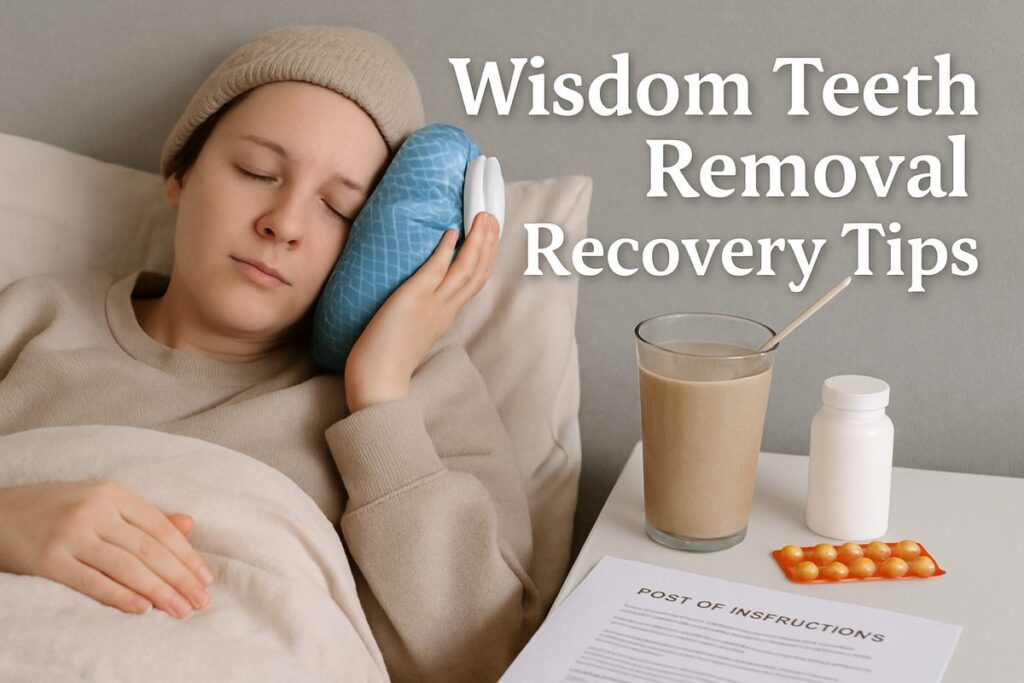
After wisdom tooth surgery, some pain and swelling are normal. Most people ask how to stop wisdom teeth removal pain quickly and safely. The short answer: use a planned mix of medication, cold then heat, rest, and careful mouth care. Follow your surgeon’s directions, take pain meds on schedule for the first 48–72 hours, use ice to limit swelling, eat soft foods, and call your surgeon if pain gets worse or new symptoms appear. If you’re in Omaha, NE, ask your oral surgeon about options that reduce opioid use.
Typical pain timeline after wisdom teeth removal
Most patients feel the worst pain 24–72 hours after surgery. Swelling usually peaks around day two and then slowly gets better. By day 3–7 pain should steadily decrease; mild soreness can last two weeks. Younger patients and simple extractions often recover faster. Complex or impacted teeth, longer surgeries, or smokers may have more pain and a longer recovery. If pain does not improve after a few days, contact your surgeon.
Immediate steps to stop wisdom teeth removal pain
Medications: OTC and prescription guidance
Start with over-the-counter acetaminophen and ibuprofen as directed by your surgeon. Taking them on a schedule (staggered if advised) helps keep pain controlled instead of waiting for it to spike. Follow your surgeon’s instructions about dosage and timing. For some patients, a short prescription opioid may be given for breakthrough pain; use it only as directed and for the shortest time needed. If you’re asking how to stop wisdom teeth removal pain in Omaha, NE, call your surgeon before changing doses.
Cold therapy, rest, and positioning
Apply ice packs to the cheek for 15–20 minutes on, 15–20 minutes off during the first 48 hours to reduce swelling and numb pain. After swelling peaks (usually after day two), switch to warm compresses to ease stiffness. Keep your head elevated when sleeping and avoid heavy lifting or exercise for several days to limit bleeding and swelling.
Eating, drinking, and oral care
Stick to soft, cool foods like yogurt, applesauce, smoothies (no straw), mashed potatoes, and scrambled eggs. Avoid hot liquids, spicy foods, straws, and smoking—these increase the risk of dry socket, a painful complication. Begin gentle salt-water rinses 24 hours after surgery to clean the area and reduce irritation. Brush carefully around the site.
Advanced pain-control options your surgeon may offer
Long-acting local anesthetics and EXPAREL®
Some surgeons use long-acting local anesthetics or EXPAREL® at the surgical site. EXPAREL® provides extended, opioid-free pain relief after surgery and can reduce the need for narcotics. Ask your surgeon before the procedure if this option is right for you.
When stronger prescription meds or follow-up procedures are needed
If pain is severe and not controlled with standard meds, your surgeon may prescribe stronger short-term medications or evaluate you for problems like dry socket or infection. In-office treatment for dry socket, antibiotics, or drainage may be required in some cases.
Warning signs: when pain is not normal
Contact your oral surgeon or seek emergency care for severe throbbing pain that starts 3–5 days after surgery, increasing swelling or fever, heavy bleeding, persistent numbness, or a foul taste or odor. These can signal dry socket, infection, or other complications that need prompt care.
Practical tips to speed recovery and reduce future pain
Stay hydrated, eat soft nutritious foods, avoid tobacco, and follow all post-op instructions. Take pain meds on schedule for the first 48–72 hours to stay ahead of pain. Keep follow-up appointments so your surgeon can check healing.
About Midwest Oral Surgery & Dental Implants and our approach to post-op comfort
Midwest Oral Surgery & Dental Implants in Omaha, NE uses board-certified surgeons, modern anesthesia, and options like EXPAREL® to reduce post-op pain. We focus on safe, comfortable care and give clear post-op instructions and 24/7 access for concerns.
How to get help if you need it
If you have worsening pain, signs of infection, or questions about how to stop wisdom teeth removal pain, call our office for advice or urgent evaluation. We can adjust your care, prescribe medication if needed, or schedule a follow-up visit.