
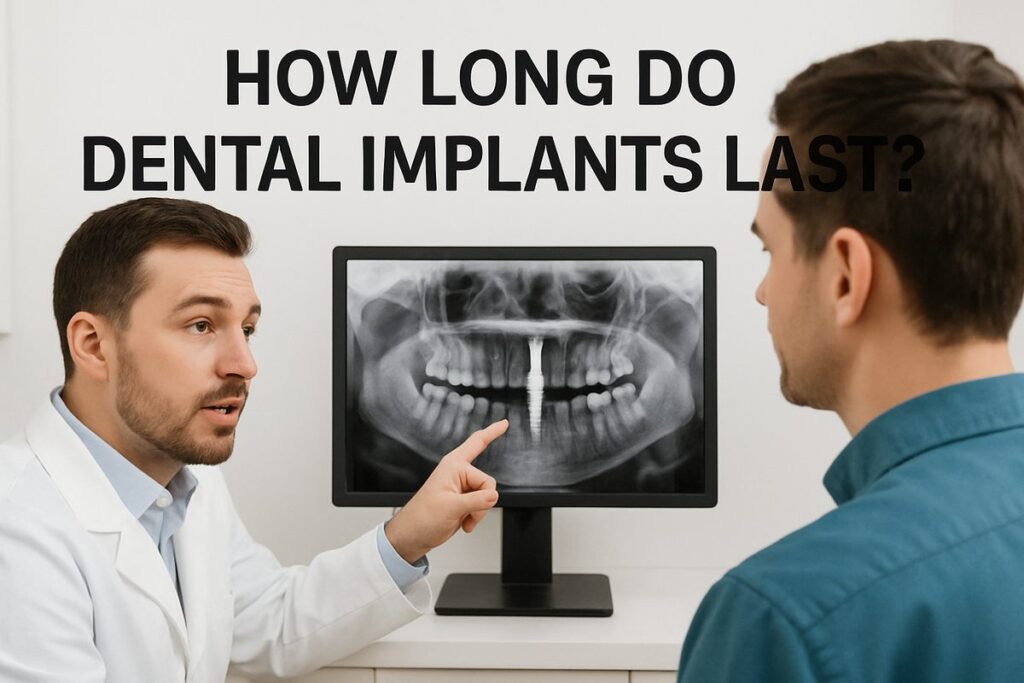
Dental implants can last for decades—and sometimes a lifetime—but the exact answer depends on several things, like bone health, hygiene, and the type of restoration used. This post explains how long are dental implants good for, typical timelines, what affects longevity, warning signs, and simple maintenance tips.
How dental implants work — a quick primer
A dental implant has three parts: the titanium or zirconia post (the implant), the abutment that connects the post to the tooth, and the prosthetic crown, bridge, or denture. The post fuses to your jawbone through osseointegration, which gives the replacement tooth stability. The implant provides the root and long-term support while the visible restoration wears over time and may need replacement.
Typical lifespan: what patients can expect
In many cases the implant post can last decades or even a lifetime with good care. Crowns, bridges, and dentures attached to implants usually need replacement every 10–15 years due to normal wear, color change, or damage. Advances in materials and techniques have improved outcomes, so answers to how long are dental implants good for in Omaha, NE tend to be better now than years ago.
Factors that determine how long are dental implants good for
Several medical, surgical, and lifestyle factors affect implant longevity.
Bone quality and oral health
Stable bone and healthy gums are key. Low bone density or severe gum disease can cause implant failure. Bone grafts or sinus lifts can rebuild bone when needed before implant placement.
Type of restoration and materials
Single crowns see different stresses than implant-supported bridges or full-arch prosthetics. Materials matter: zirconia and high-grade ceramics resist wear and staining better than some alternatives. Implant posts are usually titanium or zirconia; both are strong and biocompatible.
Oral hygiene and routine care
Daily brushing, interdental cleaning, and professional cleanings prevent gum disease around implants. Peri-implantitis (infection around the implant) is a leading cause of late failure and is often related to poor hygiene.
Lifestyle and medical factors
Smoking, uncontrolled diabetes, certain medications, and heavy teeth grinding (bruxism) raise the risk of complications and shorten implant life.
Surgical technique and provider skill
Accurate planning and placement, often using CBCT scans and surgical guides, reduce complications. Experienced surgeons who follow proven protocols tend to have better long-term results.
Maintenance tips to help implants last longer
Brush twice daily with a soft brush and low-abrasive toothpaste. Use floss, interdental brushes, or water flossers to clean around implants. Quit smoking and manage chronic conditions like diabetes. If you grind your teeth, wear a night guard. Keep regular dental and periodontal checkups so your team can catch issues early.
Warning signs of implant problems — when to see someone
See your dental team if you notice pain, swelling, loosening, bleeding, pus, or changes in your bite. Early evaluation can often save an implant at risk.
Who does what: coordination between your oral surgeon and your general dentist
An oral surgeon places the implant post and handles surgical care, while your general dentist or prosthodontist makes and fits the crown, bridge, or denture. Good communication between providers ensures proper planning, placement, and follow-up.
Why experience and modern tech matter (light practice mention)
Midwest Oral Surgery & Dental Implants in Omaha, NE combines experienced surgeons and high-tech planning to help patients get reliable, lasting results.
Quick takeaway and call to action
Many implants last decades with proper care, while restorations may need replacement about every 10–15 years. If you’re wondering how long are dental implants good for in Omaha, NE for your situation, talk with an oral surgeon and your restorative dentist to get a personalized plan and maintenance schedule.