
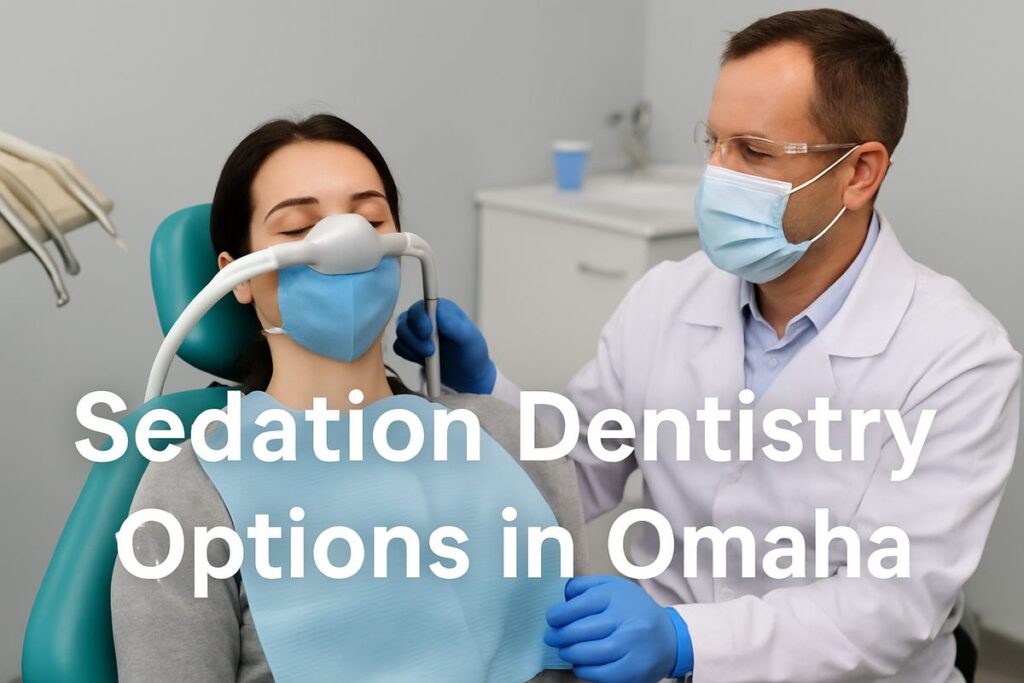
Sedation dentistry helps people get dental care with less fear, pain, and stress. Many patients in Omaha ask about sedation dentistry because dental anxiety, complex surgeries like implants or wisdom tooth removal, and long procedures make visits stressful. This guide explains what sedation dentistry is, the types of sedation used, who may benefit, risks, what to expect, costs, and how to choose a provider. It’s written for anxious patients, people facing oral surgery, caregivers of special‑needs patients, and anyone needing longer dental appointments.
What Is Sedation Dentistry?
Sedation dentistry is the use of medication to help patients relax during dental procedures. It is different from local anesthesia, which numbs only the mouth. Sedation can range from minimal (awake and relaxed) to general anesthesia (fully unconscious). Common levels include minimal, moderate (conscious sedation), deep sedation, and general anesthesia. If you are searching for sedation dentistry in Omaha, NE, this article will help you understand which level may suit your needs.
Types of Sedation Used by Oral Surgeons
Nitrous Oxide (Laughing Gas)
Nitrous oxide is inhaled through a mask and works quickly to reduce anxiety. It wears off fast after the gas is stopped, so most patients can go home soon after a short recovery. Nitrous is often used for mild anxiety or short procedures.
Oral Sedation
Oral sedation uses a pill taken before the appointment. It can produce minimal to moderate sedation depending on the dose. Patients are usually drowsy and may have limited memory of the procedure. Recovery can take several hours, and someone must drive the patient home. Oral sedation is useful for those with moderate anxiety or for longer appointments.
IV Sedation and General Anesthesia
IV sedation is delivered directly into the bloodstream and can create deeper sedation with quick adjustments by the provider. General anesthesia renders a patient unconscious and is reserved for complex surgeries or patients who cannot tolerate lighter sedation. Oral surgeons often offer IV sedation and general anesthesia for more complex cases to ensure comfort and safety.
Who Is a Good Candidate for Sedation Dentistry in Omaha, NE?
– People with dental anxiety or fear – Patients facing complex oral surgery such as implants or impacted wisdom teeth – Those with a strong gag reflex or low pain tolerance – Patients needing multiple procedures in one visit – Special‑needs patients or people with difficulty cooperating – Patients with medical conditions that make prolonged stress risky (after medical review)
Benefits of Sedation Dentistry
Sedation dentistry can reduce fear and anxiety, making treatment possible for patients who otherwise delay care. It improves cooperation, enabling surgeons to complete multiple or complex procedures in a single visit. Sedation also increases patient comfort and often reduces memory of the procedure, which can lower future dental fear. For surgical cases, sedation helps surgeons work more efficiently and safely.
Risks and Safety Considerations
All sedation carries some risk, from mild side effects like nausea, drowsiness, or dry mouth to more serious but rare events like breathing problems or allergic reactions. A complete medical history and a review of current medications are essential before sedation. Fasting instructions and quitting certain medicines may be required. Proper monitoring (oxygen, blood pressure, heart rate) and emergency protocols should be in place. Choose a provider with appropriate training and credentials for the level of sedation offered.
What to Expect: Before, During, and After Sedation Dentistry in Omaha, NE
Before
You will have a pre‑op review of your health history and medications. Follow fasting rules (no food or drink for a set time). Arrange for a responsible adult to drive you home. Ask about any premedication and what to stop before your appointment.
During
Arrival includes a review and placement of monitoring devices. Nitrous oxide is inhaled; oral sedation is taken before the visit; IV sedation is started by a trained clinician. You may feel relaxed, sleepy, or unaware of the procedure. Monitoring continues throughout until sedation is reduced.
After
Recovery varies by type of sedation—nitrous wears off quickly; oral and IV sedatives may cause grogginess for several hours. Expect instructions on diet, activity, and pain management. You’ll be released when your vitals are stable, and a caregiver can take you home.
Costs, Insurance, and Payment Options
Sedation costs can be billed separately from the surgical procedure and depend on the method used. Dental insurance may cover parts of the procedure, but often limits anesthesia coverage unless medically necessary. Many practices offer financing, in‑office payment plans, or third‑party loans to help manage costs for sedation dentistry in Omaha, NE.
How to Choose a Provider for Sedation Dentistry
Look for board certification or hospital‑based residency training, experience providing IV sedation and general anesthesia, and hospital privileges. Confirm the office has monitoring equipment, clear emergency protocols, and positive patient reviews. Ask about the team’s training, how sedation is administered, and post‑op care procedures.
About Midwest Oral Surgery & Dental Implants
Midwest Oral Surgery & Dental Implants is a multi‑doctor specialty practice with board‑certified oral and maxillofacial surgeons who hold hospital privileges. The team provides IV sedation and general anesthesia, using advanced tools like Cone Beam CT, iTero scanners, surgical guides, EXPAREL for pain management, and zirconium implant options. Their focus is safe, predictable care with attention to comfort.
Common FAQs About Sedation Dentistry in Omaha, NE
Is sedation safe for older adults or those with medical conditions?
Sedation can be safe for many older adults, but it requires careful medical review, possible physician clearance, and dose adjustments. Discuss health conditions and medications with your surgeon.
How long will I be groggy after sedation?
Nitrous oxide wears off quickly; oral and IV sedation can cause grogginess for several hours. Plan to rest the day of the procedure and have someone drive you home.
Will my insurance cover sedation for dental procedures?
Coverage varies. Some plans cover anesthesia when medically necessary. Check your benefits and ask your provider about billing and payment options.
Final Thoughts and Next Steps for Sedation Dentistry in Omaha, NE
Sedation dentistry benefits patients with anxiety, long or complex procedures, gag reflex issues, and special‑needs cases. If sedation sounds right for you, schedule a consultation to review your medical history and the safest options. To learn more about sedation dentistry omaha ne and arrange a consultation, contact Midwest Oral Surgery & Dental Implants to discuss your needs and the sedation choices available.