How Many Days Does It Take To Implant A Tooth?

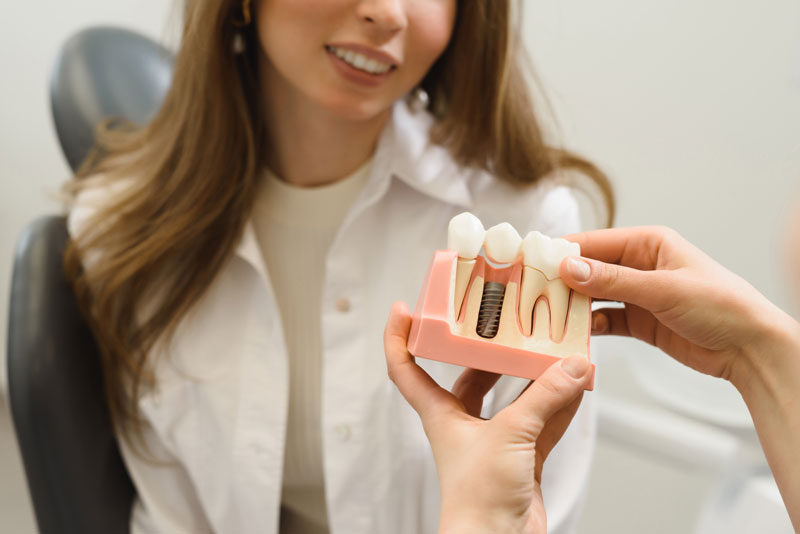
Dental Patient Getting Shown An Dental Implant Model During A Consultation

If you are experiencing tooth loss due to decay or trauma, you may be interested in replacing them. A great option to do so is with dental implants. For your convenience, dental implants can often be placed within the same day as your visit to a dentist in Omaha, NE.

Dental implants are colored to match the look of your natural tooth, and a dentist can assess your oral environment to ensure that you are a good fit for this amazing tooth replacement option.


How Do Dental Implants Work?

For dental implants to be successful, a healthy jawbone foundation and gums are necessary. A dentist will determine your eligibility for dental implants using advanced technology such 3D dental imaging equipment to capture 3D images of your current oral health. Dental implants are an investment and ensuring that your mouth is healthy enough to receive this procedure is necessary. Once approved for dental implants, the discussions on eligibility of a same day procedure or if additional procedures are needed to fix any oral health problems begin.

Immediate or same day implants offer a number of great benefits for you. With one visit, you can replace any infected or unsalvageable teeth with a new set or individually placed dental implants based on your individual treatment plan. Some dental offices offer dental implants that are manufactured in-office and aids in the expedited nature of same day (in most cases under 1 hour) dental implant placement procedures. With the guidance of a skilled and knowledgeable dentist, you can receive a brand-new smile in record time and with exceptional precision!

With A New Set Of Teeth Via Dental Implants, You Can Enjoy:

  • Carefree smiles and laughter
  • A satisfying diet including your favorite foods
  • Clear, unaffected speech
  • Greater self-confidence
  • Better overall dental health

To maximize the benefits of your new smile investment, it is important to keep a healthy oral environment and make good lifestyle choices to protect your smile and overall health. A dentist can assist you in created a solid plan to do this and help you maintain your beautiful new smile!


Are You Ready To Get Dental Implants?

Start on a path to a brand-new smile today in potentially just one visit by calling our doctors, Dr. Jerome M. WeesDr. John Wewel, and Dr. Benjamin J. Anderson in our office in Omaha, NE and schedule your appointment today to be considered for dental implants!


How Do You Care For Your Dental Implants?

patients smiling after their dental implant treatment

After receiving dental implants, you’ll want to take care of your investment. Once they have been surgically placed by a trained professional, dental implants can last you a lifetime. However, you still need to take a few steps to ensure that your implants — and mouth in general — stay healthy.

Below are several ways that you can protect your dental implants!

1. Brush and floss regularly.

Even if you have received full mouth dental implants, you still need to take care of your gums. This includes brushing them with an extra-soft toothbrush and flossing if possible. (It is easy to floss around single implants. If you have a full arch overdenture, you should talk with your doctor about the best way to incorporate flossing into your routine.)

2. Attend all your scheduled dental appointments.

Everyone, including people who have lost all their teeth, should visit a dental provider at least twice a year. Dentists and their teams do not just focus their attention on teeth, after all. They also concentrate on helping patients like you maintain optimum oral health and avoid problems like gum disease, cancer, and TMJ disorder. At every visit, your dentist will make sure your dental implants and crowns or prosthesis look good.

3. Ask your implant doctor about any concerns.

When placed by knowledgeable implant clinicians, dental implants have a very high success rate. Occasionally, though, dental implants can fail. For this reason, you should contact your dental provider immediately if you experience swelling around the implant, the implant seems to be loose, the implant area begins to tingle or hurt, the implant site smells unpleasant, or you notice pus coming from the gums around the implant. The sooner you alert your doctor, the less chance you have of losing the implant.

4. Eat the foods your doctor recommends post-surgery.

Once your body has fully healed from your implant surgery, you can eat whatever you like. Until then, follow your doctor’s dietary instructions. Putting too much force on a new implant can weaken it and extend the time it takes for it to fuse with your jaw bone. Remember that you have a lifetime to eat hard, crunchy foods: You can wait a few months to give your implant the time it needs to stabilize.

Get Great Results From Your Dental Implant Surgery

Nothing compares with having a brighter, more complete smile thanks to advancements in dentistry like dental implants. The more effort you put into taking care of your implants, the better your chance of loving them for life! Contact us to schedule a consultation in our office today!

What Should I Get, Full Arch Dental Implants Or Dentures?

a women deciding on dental implants or dentures

You may be missing all the teeth in your upper or lower jaw. Nevertheless, you have options when it comes to restoring your smile. Many adults work with their dental providers to decide whether removable dentures or full-arch dental implants make more sense. Below are some questions to ask yourself to help you determine which solution best fits your personal and healthcare goals.

Do I Want the Hassle of Caring for Traditional Dentures?

Traditional dentures require a lot of upkeep. In addition to removing them every night, you must keep them sanitized. Over time, you can expect to spend money on denture creams. Plus, your dentures will need to be replaced about every 5-10 years as the shape of your jaw changes due to progressive bone loss.

In contrast, full-arch dental implants are permanently secured in your mouth. You will need to brush and, if desired, floss them. However, they do not need any special daily attention. And you get to sleep with a full set of replacement teeth!

Am I Willing to Risk Bone Loss?

When you lose a tooth, your body immediately begins to lose bone density. Eventually, this changes the way your jaw and gum line look. Have you ever noticed that many people without teeth get a “sunken in” appearance around their cheeks and lips? This is due to bone loss.

Traditional dentures cannot stop bone loss but full-mouth dental implants can. The implants are surgically placed in your jaw, allowing them to encourage continued bone health. Being able to keep a fuller, more natural jawline is not just great for your body. It is great for your confidence, too. Plenty of people are amazed at how much younger they look after receiving full-arch dental implants.

Do I Want to Keep Paying for Dentures?

Investing in dental implants costs more upfront than investing in dentures. With that being said, dental implants pay for themselves in the long run. Dentures require constant attention and can be easier to break or lose. And remember that if you experience extensive bone loss, you may require future surgeries to restore the form and function of your jaw.

You may not have to pay for your dental implants all at once, either. Some dental insurance or medical coverage plans will pay for a part of the procedure. Plus, you could work with your provider on a financing arrangement that works with your budget. That way, you can get all the benefits of dental implants without worrying about the immediate cost.

Is It Time to Talk With a Dental Provider About Implants?

Dental implants have arisen as the top choice for tooth replacement. If you want to know how you can get the advantages that come from the latest implant technology, contact our doctor, and schedule your consultation in our office today!

Can A Dental Implant Fall Out?

dental patient missing his first premolar

What is a dental implant? A dental implant is surgically attached metal post to your jawbone as a support to an artificial tooth. After placed, a dentist or an oral surgeon screw in a replacement tooth to the implant. The success rate for a dental implant is high but there are still complications and failures that can occur, leading to an implant falling out. Studies show that about 5 to 10 percent of dental implants fall out, immediately following the procedure or years down the road.

What Are The Dental Implant Failure Risk Factors?

Gum disease

Damage caused to the jawbone and gums from an infection. You must have healthy gums in order to have dental implant surgery. If you have active gum disease, a dentist will not perform the procedure and they will recommend gum disease treatment.

Smoking

Restricts the blood flow to the gums, causing the healing processed to be slowed. Smokers’ likelihood of have dental implant failure rate up to 20 percent in recent studies. Just because you smoke doesn’t disqualify you from getting dental implants, it is encouraged that you stop smoking for a least a month to two months so that the implant and heal properly.

Insufficient jawbone

You must have enough healthy jawbone for the implant to be placed surgically in your jaw. You may need to see a specialist to get bone grafting depending on the current health of your jawbone.

Medical Conditions

Autoimmune diseases or conditions like rheumatoid arthritis and diabetes can be a possibility factor for dental implant failure if diagnosed, which are conditions that causes the healing process to be slower. Osseointegration is caused by slowing down the healing process and the implant integrates and fuses into your jawbone.

Poor dental maintenance

Good oral hygiene before and after a dental implant does cause an impact on the rate of success for the implant.

Inexperienced Doctor

Not all doctors are created equal. You may be referred to a preferred doctor by your dentist, but you do have the ultimate option to select whatever provider you would like to go to.

Are You Interested In Learning More?

Schedule your consultation with our doctor today, to start your journey to a brighter, healthier smile!

Are Dental Implants Safe In The Long Run?

elderly dental implant patients smiling

Dental implants are a great and commonly used option for replacing missing or damaged teeth. As such, especially if you are experiencing tooth loss or damage and are interested in receiving dental implants, you may be wondering about their overall safety and longevity. A dentist can assist you in making the best choice in deciding to receive dental implants!

The Facts About Dental Implants

Dental implant surgery is a procedure that replaces natural tooth roots with metallic or ceramic, screwlike posts; damaged or missing teeth are replaced with artificial teeth that look and function much like real ones. Dental implants can be a great alternative to dentures or bridgework that don’t fit well and can be an option when a lack of natural teeth roots doesn’t allow for building denture or bridgework tooth replacements, as they act as natural tooth roots.

Dental implant surgery may involve several procedures and is largely dependent upon the type of implant and the condition of your existing jawbone. A major benefit of implants is creating solid support for your new teeth — a process that requires the bone to heal tightly around the implant. Since jawbone healing requires time, the process can take several months in total.

As with any surgical procedure, risks are involved. However, they are easily remedied and often avoided altogether due to high level expertise from the dental staff and professionals. Risks can include:

  • Infection at the implant site
  • Injury or damage to surrounding structures, such as other teeth or blood vessels
  • Nerve damage, which can cause pain, numbness or tingling in your natural teeth, gums, lips or chin
  • Sinus problems, often caused when dental implants placed in the upper jaw protrude into one of your sinus cavities

Are You Considering Dental Implants? Get An Expert!

Dental implants are, without a doubt, a great option for anyone looking to improve their smile. Overall, dental implant surgery poses minimal risk or safety issues, however, choosing the right dental professional with expertise in placing dental implants successfully, is of the utmost importance in ensuring the procedure is effective while circumventing any potential issues.

Get on track to a new smile today with dental implants with minimal safety issues in our office by contacting our doctor, and scheduling your next consultation today!

Three Compelling Benefits of Dental Implants!

Two Dental Patients Smiling After Their Dental Implant Procedures

With new advances in dental technology and the ease of treatment, there is no reason that every patient should not love their smile. Your smile is a big part of who you are, and we believe you should always have the confidence you need to show it off.

If you have missing or broken teeth, we offer dental implants in Omaha, NE to preserve your natural smile and that you feel great about the way you look. Dental implants are an alternative to dentures and provide unique benefits to patients!


Easy To Take Care Of:

Because dental implants replace the natural tooth entirely, they can be cared for easily. Dental implants are typically created out of metal or ceramic, which makes them highly durable and long-lasting. As a result, your implants can last for many years without any special care or attention necessary. Clean the implants as you would your natural teeth through brushing, flossing, and regular dental exams. Your standard oral hygiene regimen can protect you from potential oral health problems and gum disease problems associated with dental implants, just like natural teeth.

Preserve Your Jaw:

If you have lost teeth, your jaw may start to deteriorate from lack of use and not having anything else in place to maintain it. When the jawbone is compromised, your smile may lose its natural shape and look different. Implants are posts that are installed straight into the jawline, whereas dentures are simply an aesthetic cover. Since implants serve as a tooth root, the jawbone is preserved and will not deteriorate over time. This makes dental implants an excellent option for protecting the jawbone. With dental implants, you can keep your natural smile for years to come!

Eat What You Want:

Certain foods become difficult to eat with dentures because the teeth may slip or be too painful to eat with. After complete healing and transitioning into permanent restorations, with dental implants, you will never have to worry about losing weight or adjusting your diet simply because of missing teeth. This will open many new diet possibilities and give you more freedom with what you can eat. Enjoy all the foods you love without worrying that your teeth will fall out in the middle of a dinner party!


Considering Dental Implants?

If you are tired of your smile and want to increase your self-confidence and love how you look, contact our doctors, Dr. Jerome M. WeesDr. John Wewel, and Dr. Benjamin J. Anderson, in our office in Omaha, NE, to schedule your appointment today!

5 Reasons Why You Should Get a Dental Implant!

2 Dental Patients Smiling After Their Dental Implant Procedure

Many people suffer from tooth loss for one reason or another. Regardless of whether you lost a tooth to decay, disease, or an accident, we offer tooth replacement options such as dental implants in Omaha, NE. Here are five reasons why dental implants are so valuable to replace missing teeth!


1. Minimal Maintenance

Dental implants are designed to maintain the dental health of your adjacent teeth. The fixed dental implant acts as an anchor for restorations, allowing you to eat almost any food without fear of it damaging your dental work. It also helps prevent periodontal disease and provides a stable foundation for your smile.

2. Prevents Dental Problems

When you lose a tooth, the surrounding teeth shift over time, leading to dental problems such as jaw pain and even earache. Replacing missing teeth with dental Implants can eliminate these effects because they effectively support the remaining natural teeth and bones in your mouth as a tooth would.

3. Effective Replacement Option

Dental implants cost more than other dental options, but dental implants are an effective long-term replacement option for missing teeth. Unlike dentures and other dental prosthetics that may be lost or damaged, dental implants do not need replacing. Once installed, they will retain their original condition with proper oral hygiene. If you consider the cost of dental implant surgery compared to the maintenance and aesthetics costs of dental bridges, dental crowns, and dentures, dental implants are a great value!

4. Restores Function

People tend to lose natural teeth as they age because it is common for older people to suffer from medical conditions that affect tooth loss, such as diabetes or gum disease. Dental implants restore normal chewing function, speech, and facial structure by replacing missing teeth with artificial alternatives.

5. Improves Outlook on Life

Even if you have lost only one tooth, it can still affect your quality of life. You may find yourself worrying about remaining conscious about your mouth during meals out in public or avoiding certain social settings because you are self-conscious about your dental appearance. When you have dental implants, you’ll be able to enjoy a more fulfilled life without worrying about your dental health!


Considering Dental Implants?

If you are tired of your smile and want to increase your self-confidence and love how you look, contact our doctors, Dr. Jerome M. WeesDr. John Wewel, and Dr. Benjamin J. Anderson, in our office in Omaha, NE, to schedule your appointment today!

What Are The Chances of Dental Implants Causing Gum Disease?

Dental Patient Needing Periodontal Treatment

Do you have missing teeth and are looking for a way to fill in any gaps so that you can smile big and wide again? Dental implants might be the right choice for you. Have you heard horror stories about dental implants being involved with gum disease and that has deterred you from wanting to get implants? Let’s take a look further to see what the causes of gum disease are. A dentist in Omaha, NE might recommend alternatives if your gums aren’t health enough to support the dental implant.


Gum Diseases: An Overview

Two of the most common gum diseases are gingivitis and periodontitis. Gingivitis is a bacterial infection causing inflammation of the gums, which can turn into periodontitis if left untreated. A small space called a sulcus is the area where your gums attach to the bottom portion of your teeth. The space is large enough for food and plaque to get stuck in there causing an infection in your gums. If you do not get your gums checked or treated, gingivitis can cause a separation of the gums and the teeth, which can then cause injury to the bone supporting the tooth and soft tissue.

Dental implants cannot cause gum disease any more than natural tooth roots naturally do. In order to be considered for dental implants, your gumline needs to be healthy before a dentist in Omaha, NE will examine you for the dental implant procedure. The first step in considering you for dental implants is an evaluation. A dentist will complete a full mouth examination to let you know if your teeth and gums are healthy enough and if you are a great candidate for dental implants. If not, a dentist will recommend alternative ways to fix the missing teeth that you have or to assist you with getting your gums healthy enough for dental implant surgery.


Interested In Learning More?

Are you tired of seeing spaces in your teeth or feeling like you still have something lodged in your teeth? Are you ready to get that big, beautiful smile again and regain your confidence? Call our doctors, Dr. Jerome M. WeesDr. John Wewel, and Dr. Benjamin J. Anderson, in our office in Omaha, NE and schedule your appointment today!

Missing Teeth? Dental Implants Can Help with That!

Dental Implant Patients Smiling Together And Eating Dinner

Are you self-conscious about your smile because you have missing teeth? Did you know that your bite can be thrown out of alignment and your facial shape could change because of missing teeth? You can replace your missing teeth and get a great smile again with dental implants! A dentist in Omaha, NE might highly recommend dental implants for you as the right choice to getting back on track and getting that big, beautiful smile once again.


What Are Dental Implants?

Dental implants are artificial roots placed in the jawbone to replace missing teeth. You may wonder how the artificial roots stay in place. Well, overtime the bone grows around the artificial roots and that holds the roots in place. The gap is still there, but via a metal connector, the false teeth are attached; revealing a full set of teeth. There are two different types of dental implants – endosteal and subperiosteal. Endosteal are implants that are placed in the bone. They are the most common type of implants, made from material that is safe for the body, and just using one implant can anchor one or multiple teeth. The second type of implant is subperiosteal, which is used when the jawbone isn’t healthy enough to support the endosteal implant. These implants are placed above or on the bone and are not drilled into the bone.

Surgery Time And Recovery

The placement of implants can take a minimum of 3 months or as many as 9 months. The procedure is broken up into multiple appointments to cause as less pain as possible to the patient. A dentist in Omaha, NE may recommend that you see a range of dental specialists, from a periodontist to an oral surgeon before the procedure is completely done. Implant surgery is broken down into 5 different steps; evaluation (to see if your jawbones are healthy enough for the implant), placing the implant, osseointegration (a 2 to 6 month process of combing the bone), abutment placement (used to connect the implant to the missing teeth), and placing the tooth.


Interested In Learning More?

Are you tired of seeing spaces in your teeth or feeling like you can’t smile as big and wide as you want to? Call our doctors, Dr. Jerome M. WeesDr. John Wewel, and Dr. Benjamin J. Anderson, in our office in Omaha, NE and schedule your appointment today!

Advantages of Full-Arch Dental Implants vs. Dentures

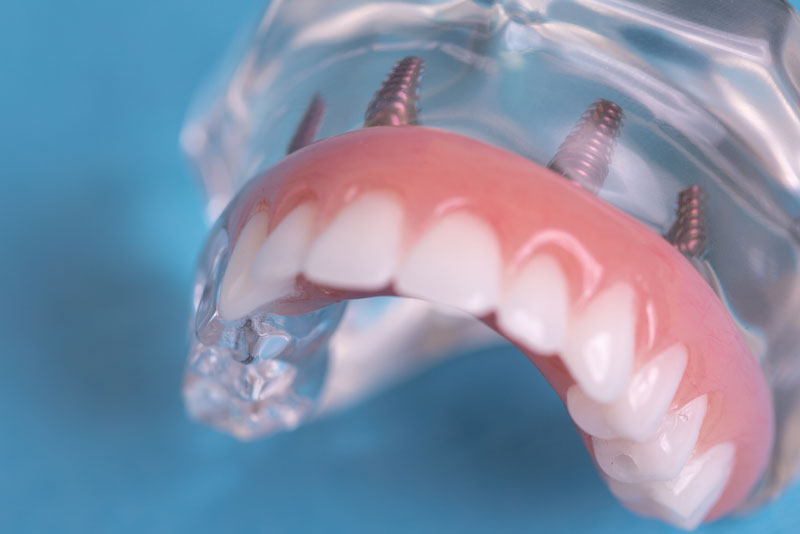
Full Arch Dental Implant Model

If you are experiencing multiple missing teeth or are completely without teeth, full arch dental implants solutions may be a great solution to restore your smile, oral health, oral function, and may renew your self-confidence. A doctor in Omaha, NE can guide you in the right direction of choosing which option is best for you.


Dental Implants vs Dentures

Dentures

Typically in the past, if a patient had multiple missing teeth, a dentist in Omaha, NE would recommend a dental bridge or denture restoration solution. Dentures are full arch prosthetics that rest on the gums. As time progresses, missing a tooth root to stimulate healthy bone growth will lead to receding bone, causing the denture to fit poorly. Poor-fitting dentures cause discomfort by rubbing against the gums, embarrassment due to slipping and shifting while talking and eating and will lead patients to utilize messy adhesives to offer stability to the prosthetic to stay in the mouth. Due to these issues, patients must return for frequent adjustments.

Dental Implants

Dental implants offer patients a long-term, stable, and reliable alternative to dentures. Dental implants can be placed along with a prosthetic – either a denture or a full arch bridge – that is attached, or snapped in place, on top. This removable feature allows for a more convenient option, with more fixed and permanent options also available.

A dental implant specialist places 2-8 dental implants into the jawbone, replacing the natural tooth roots’ function of stimulating healthy bone growth. Once the treatment site has been allowed to heal, usually 3-8 months, the prosthetic is attached for restoration purposes. In many cases, bone grafting may be done before surgery and allowed to heal to ensure the implant placement is successful.

The implant post also removes the issue of bone degradation. With a sturdy foundation, there’s no need to worry about slipping, clicking sounds, or discomfort often associated with dentures, and patients can eat the foods they enjoy again as these prosthetics do not have a palate like dentures that limit a patient’s ability to taste.


Get A New Smile Now!

With new, more stable options, there’s no need to continue dealing with the hassle of dentures. Be sure to call our doctors, Dr. Jerome M. WeesDr. John Wewel, and Dr. Benjamin J. Anderson, in our office in Omaha, NE today to bet free of poor-fitting dentures by scheduling an appointment today!